
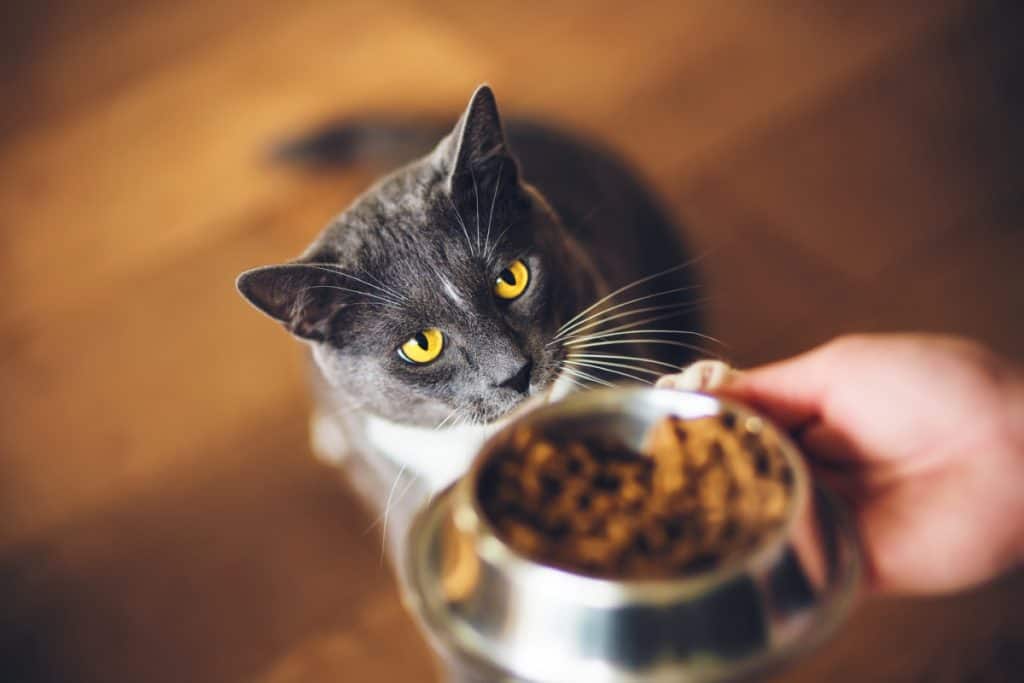
Many cat owners, especially those who adore their pets like family, want to understand exactly what ingredients go into every bowl.
One name that comes up frequently is carrageenan, a substance found in many canned cat foods. If you search for it online, you’ll quickly stumble across a long list of warnings claiming that carrageenan is harmful or even dangerous.
It’s understandable that these concerns would cause worry, especially for older pet parents who are trying to make thoughtful choices for their beloved companions.
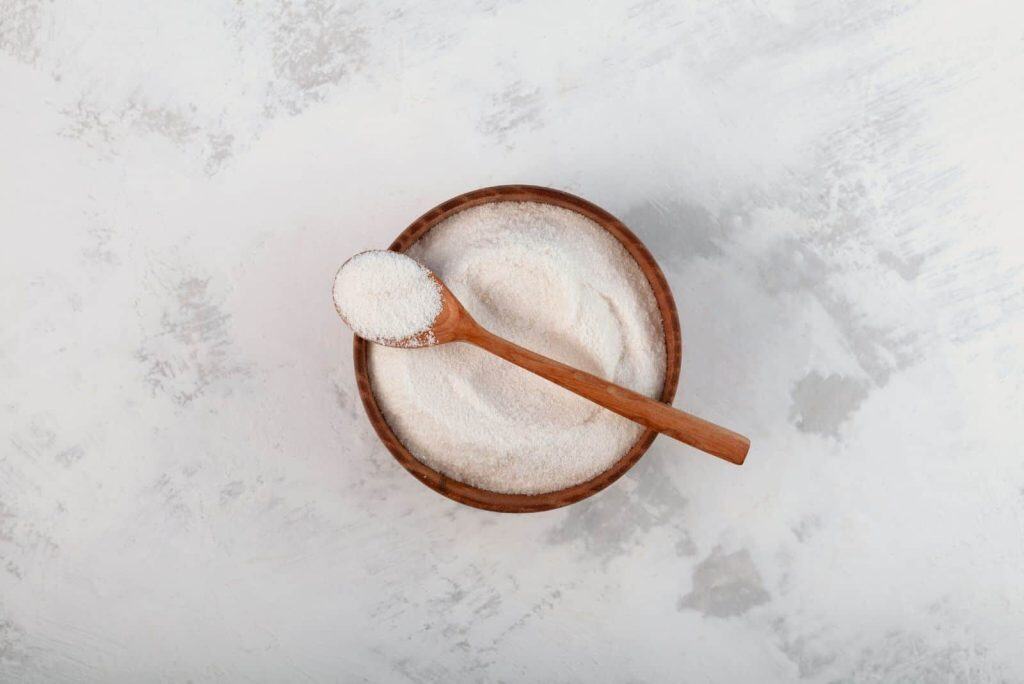
The truth, however, is more reassuring than many of those online claims suggest. Carrageenan is not considered harmful, and when used in pet food, it serves a very specific and safe purpose.
This article explains what carrageenan really is, why it appears in wet cat food, and what the science actually says about its safety.
Understanding What Carrageenan Actually Is
Carrageenan, despite its complicated name, is simply a natural carbohydrate extracted from a family of red seaweeds. These seaweeds have been harvested for centuries and used around the world as food thickeners, gel agents, and stabilizers.
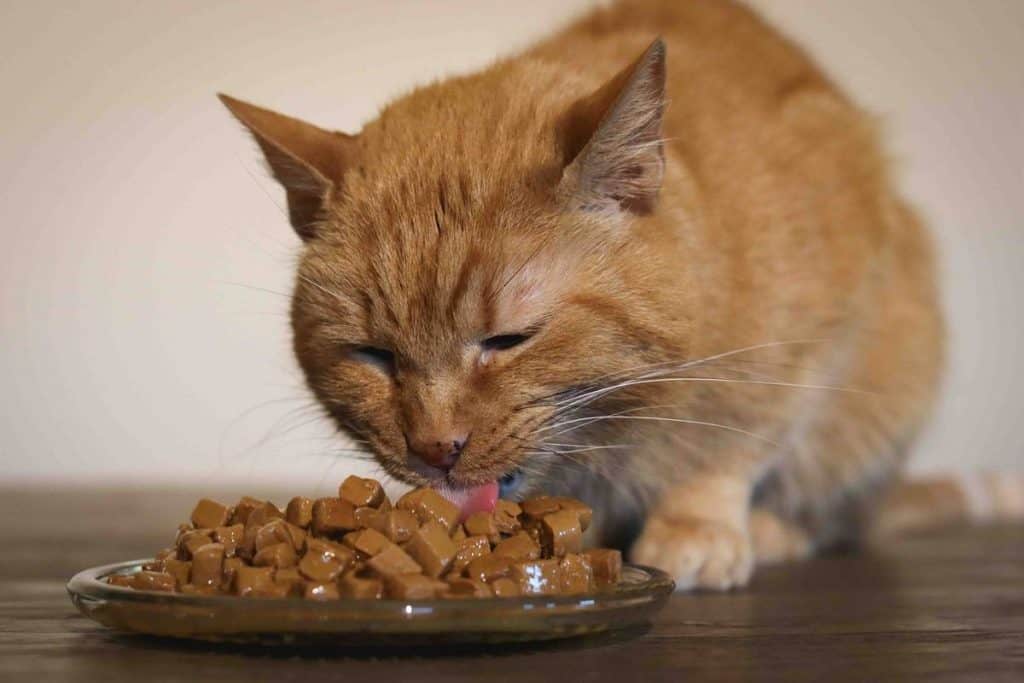
The ingredient was formally approved by the U.S. Food and Drug Administration (FDA) in 1961, and it remains widely used in foods today.
It shows up in familiar items like ice cream, ham, soy sauce, yogurt, chocolate milk, and even canned meats. Its presence in cat food is part of a much larger history of use in both human and pet nutrition.
Why It’s Used So Often
Carrageenan improves texture and consistency. In FDA terminology, it functions as:
- A fat replacer: helping certain foods feel creamy without adding extra fat
- A stabilizer: preventing ingredients from separating
- A thickener: creating a fuller, smoother texture
- A binder: helping foods hold their shape
- A texturizer: creating a pleasant mouthfeel
Carrageenan contributes no flavor, smell, or nutritional value. It simply helps canned foods maintain a consistent, appealing texture. That’s why you’ll see it in so many brands of wet cat food.
Where the Fear Comes From
You may be wondering, If it’s safe, why do so many articles warn against it? Most of the confusion stems from the fact that there isn’t just one type of carrageenan. Instead, there are three distinct forms:
- Food-grade carrageenan (the safe one used in foods)
- Degraded carrageenan
- Poligeenan
The last two—degraded carrageenan and poligeenan—are not used in foods of any kind. Researchers have shown that those specific forms can irritate the digestive system and may trigger inflammation. Understandably, that research caused alarm.
However, these studies examined only the degraded forms, not the food-grade version. Food-grade carrageenan does not behave the same way in the body, nor does it break down into the harmful forms during normal digestion.
A 2019 scientific review addressing widespread misunderstandings stated clearly:
“Human consumption of food-grade carrageenan as a food additive is completely safe with no demonstrated adverse effect.”
If it is safe for humans to consume regularly, it is also considered safe for cats. Pet food manufacturers do not use degraded carrageenan or poligeenan. Your cat’s canned food would contain only the food-approved type.
Why Carrageenan Remains Common in Cat Food
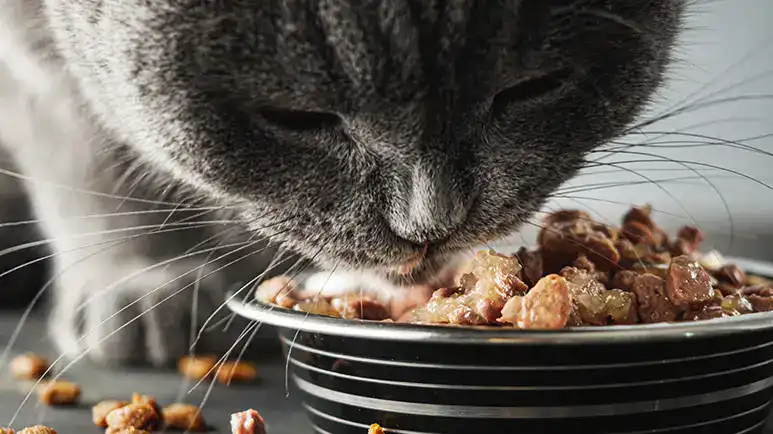
Wet cat food manufacturers rely on carrageenan because it provides a smooth, uniform consistency that helps blend the water, proteins, and fats in the formula. Without stabilizers like this, many canned foods would separate into layers.
For older cat parents who prioritize moisture-rich foods for hydration and kidney health, carrageenan helps ensure the food stays appealing and easy to eat.
It keeps everything mixed evenly so each serving has the right balance of nutrients.
Another important point: carrageenan allows companies to avoid using higher levels of fat or artificial texture enhancers. In other words, it supports healthier formulas while keeping costs reasonable.
Common Misconceptions Explained
Many websites repeat the same misinformation: that carrageenan causes cancer, inflammation, stomach problems, or other serious illnesses. These claims come from outdated studies that used non-food-safe forms of the ingredient.
Here’s what often gets misunderstood:
- Food-grade carrageenan is not degraded or chemically altered
- It is not associated with inflammatory bowel disease
- It is not linked to cancer
- It does not turn into poligeenan inside the body
- It has been tested for decades with no proven harmful effects
When people worry about carrageenan, they are usually confusing these very different substances. Only one form is permitted in the food industry, and it is the most carefully evaluated and regulated of the three.
Should You Choose Carrageenan-Free Cat Food?
Many companies now offer carrageenan-free formulas simply because customer demand has increased. Whether or not you make the switch is a matter of personal preference.
Reasons Some Cat Owners Avoid It
Some pet parents prefer the peace of mind of minimizing any controversial ingredient, even if scientific research supports its safety. They may feel more comfortable choosing foods with shorter, simpler ingredient lists.
Reasons Others Continue Using Foods With It
Those who trust the current body of research know that carrageenan has a long and well-documented safety record. It remains an approved additive in both human and pet food, and no studies have shown harmful effects from food-grade use.
As long as the food meets high nutritional standards, contains high-quality protein, and is appropriate for your cat’s age and health needs, carrageenan alone is not a reason to avoid it.
Veterinary nutritionists generally agree:
There is no scientific basis to recommend that all cat owners avoid carrageenan.


What Matters Most for Your Cat’s Health
Choosing cat food can feel overwhelming, especially when online debates make certain ingredients sound frightening. When it comes to carrageenan, the most important thing is understanding the difference between the safe, regulated form used in food and the unrelated substances that caused concern in earlier studies.
Food-grade carrageenan remains widely approved, heavily researched, and commonly used. If you feel uneasy about it, switching to a carrageenan-free option is perfectly reasonable. But you can also confidently continue feeding foods that contain it, knowing the science supports its safety.
At the end of the day, what matters most is selecting a diet that keeps your cat healthy, hydrated, and happy. When you understand the facts, you’re able to make the choice that feels right for both you and your feline companion.

I’m Chris, a lifelong cat lover and rescue advocate based in Austin, Texas. What started with one scruffy shelter cat ten years ago turned into a mission — sharing the stories of cats who got their second chance. I believe every rescue cat has a tale worth telling, and I’m here to tell them. When I’m not writing, I’m probably being ignored by my own three rescues